When a family structure changes, the emotional landscape changes too.
But unlike mothers — who have more accepted emotional channels and social permission to seek help — most fathers process that change alone.
Men are still taught that emotional vulnerability = weakness.
So when fathers are hurting, grieving, or losing time with their children, they often go underground emotionally.
And that is where damage happens.
The Hidden Emotional Reality for Separated Fathers
Fatherhood after separation is not just about new living arrangements — it’s about reconstructing identity, purpose, and connection.
Research shows that separated and divorced fathers report significantly elevated psychological distress, parental role strain, and isolation. Many fear losing access, influence, and everyday closeness with their children.
And the pain is not only emotional — it’s existential.
Why Men Don’t Talk About It
Men are often taught to hold everything in. Society still expects fathers to stay “strong,” composed, and emotionally unshakable.
But silence doesn’t equal strength — it just hides suffering.
In national surveys, a majority of separated fathers report they do not feel emotionally supported by friends, family, or even professionals.
This stigma makes it harder for fathers to reach out when they need it most.
The Gender Role Trap in Parenting
We still collectively assume that women are: better caregivers; more intuitive with children’s needs; better in educational or domestic roles. These assumptions reflect cultural bias — not capacity.
Men can be, and often are, equally strong (or even stronger) primary caregivers.
Fathers cook. Fathers nurture. Fathers teach. Fathers guide.
But bias prevents them from being seen that way.
And Custody Outcomes Reflect These Biases
In the U.S., roughly 80% of custody cases still award primary physical custody to mothers.
Even when fathers are loving, consistent, and involved, they are often treated as “secondary.”
That hurts fathers — and it hurts children.
Why Community Matters for Fathers
Fathers heal when they’re not alone.
Spaces where men can speak openly — without judgment — reduce shame, build resilience, and help fathers stay grounded in their identity as parents.
Community is not a luxury.
It’s a lifeline.
An Invitation to Fathers in Our Community
If you are a father going through separation or divorce — you don’t have to navigate this journey in isolation.
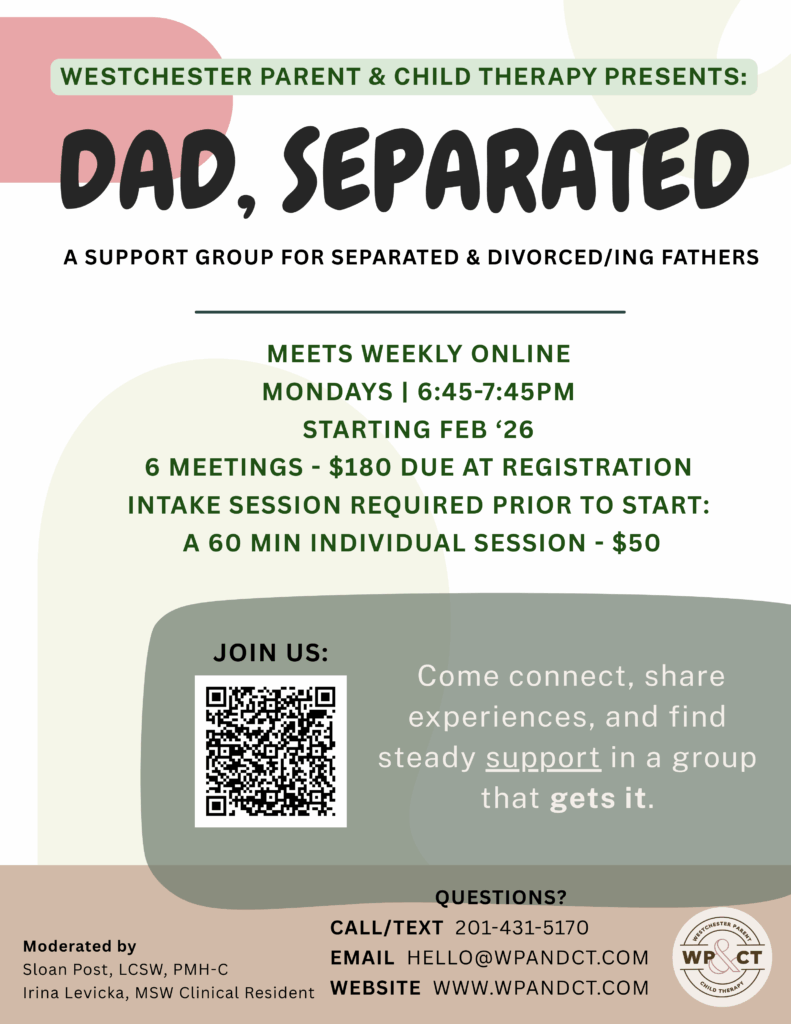
Dad, Separated, our weekly support group is here for you!
Mondays 6:45–7:45p (hybrid: online/offline) sign up here